
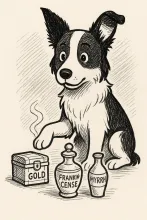
🐾 Zuko Explains – Gifts of the Magi
Quick Summary
The three gifts of the Magi weren’t random luxury items. In the ancient world they carried precise historical value and cultural meaning. In Scripture they form a compact confession about who Jesus is:
- 🪙 Gold — tribute fit for a King (Jesus' birth).
- 🕯️ Frankincense — incense of divinity and priestly worship (Jesus' life - then and now).
- 🌿 Myrrh — spice of suffering, anointing, and burial. (Jesus' death.)
Key passage: Matthew 2:1–12. See also Isaiah 60:6; Exodus 30:34–37; Mark 15:23; John 19:39.
🏺 Historical Background (Trade & Culture)
Ancient trade corridors (Arabian/Nabataean incense routes) moved precious goods from southern Arabia (Oman/Yemen) and East Africa through the Levant to the Mediterranean.(The Levant is the land bridge between the two continents. Everyone wishing to go from one continent to another for trade or war had to pass through Israel.)
Among the most coveted: gold, frankincense (resin from Boswellia), and myrrh (resin from Commiphora).
- 🪙 Gold — universal symbol of wealth and royalty; common tribute to kings and deities. It is incorruptible and never rusts. (cf. the Queen of Sheba bringing gold to Solomon, 1 Kings 10:2).
- 🕯️ Frankincense — aromatic resin used in temple worship across the ancient Near East; costly, transported by camel caravans along the famed Frankincense Trail.
- 🌿 Myrrh — resin used in perfume, medicine, and embalming/burial customs (notably in Egypt and among Jews).
🪙 Gold — Royal Tribute
Cultural significance: the premier metal of the ancient world, broadcast of kingship and sovereignty.
Biblical echoes: Bringing gold to a great king (1 Kings 10). In the messianic context, gold acknowledges Jesus as King—the heir of David’s throne.
🕯️ Frankincense — Deity & Priesthood
Cultural significance: a sacred incense for divine worship; dictated to be blended for holy use in Israel’s priestly service (Exodus 30:34–37).
Symbolic meaning: points to Jesus’ divinity and priestly mediation—God with us, and mediator between God and humanity.
Break Down:
🕯️ 1. The Holy Incense – Frankincense in the Tabernacle
📖 Exodus 30:34–38 — God gives Moses the formula for sacred incense.
“Then the LORD said to Moses, ‘Take sweet spices—stacte, onycha, and galbanum, and pure frankincense … there shall be an equal part of each.
Make an incense blended as by the perfumer, seasoned with salt, pure and holy.
You shall beat some of it very fine and put part of it before the testimony in the tent of meeting… It shall be most holy to you.’”
Purpose: Burned on the golden altar of incense before the veil each morning and evening (Exodus 30:7–8).
Meaning: Symbolized prayer ascending to God (cf. Psalm 141:2; Revelation 8:3-4).
Restriction: It was holy, not to be duplicated for personal use.
“Whoever makes any like it to use as perfume shall be cut off from his people.” (Exodus 30:38)
🥖 2. Frankincense on Offerings
📖 Leviticus 2:1–2, 15–16 — Grain (meal) offerings included frankincense.
“He shall put oil on it and lay frankincense on it, and bring it to Aaron’s sons the priests… the priest shall burn this as its memorial portion on the altar, an offering by fire of a pleasing aroma to the LORD.”
Use: Every grain offering was to include frankincense on top (Leviticus 2:15–16).
Meaning: A sweet aroma representing devotion and prayer offered to God.
🍞 3. Frankincense on the Table of Showbread
📖 Leviticus 24:7 — Used with the weekly “bread of the Presence.”
“And you shall put pure frankincense on each row, that it may be on the bread as a memorial portion, as an offering by fire to the LORD.”
Use: Placed beside the loaves on the holy table inside the sanctuary.
Meaning: The fragrance represented the continual remembrance before God of His covenant with Israel.
💨 4. Frankincense as Symbolic Offering in Prophecy
📖 Isaiah 60:6 — A prophetic vision of nations worshiping the Messiah.
“They shall bring gold and frankincense, and shall proclaim the praise of the LORD.”
Significance: Fulfilled in the Magi’s gifts (Matthew 2:11).
Meaning: Represents worship, praise, and divinity offered to the Messiah.
✝️ 5. New Testament Echo
📖 Matthew 2:11 — The Magi bring frankincense to Jesus.
“They opened their treasures, they presented to Him gifts of gold, frankincense, and myrrh.”
Symbolic meaning: Recognition of Christ’s divinity and priestly role — the same fragrant incense once reserved for the presence of God.
🪔 Summary Table
| Context | Reference | Use | Meaning |
|---|---|---|---|
| Tabernacle Incense | Exodus 30:34–38 | Sacred blend for altar of incense | Prayers ascending to God |
| Daily Burning | Exodus 30:7–8 | Burned each morning and evening | Worship and intercession |
| Grain Offerings | Leviticus 2:1–2, 15–16 | Placed atop flour and oil | Devotion and thanksgiving |
| Showbread | Leviticus 24:7 | Placed on each row | Memorial before God |
| Prophecy | Isaiah 60:6 | Brought by nations | Worship of the Messiah |
| Magi’s Gift | Matthew 2:11 | Presented to Jesus | Divinity and priesthood of Christ |
🌿 Myrrh — Suffering & Burial
Cultural significance: used for anointing, medicine, and especially burial.
- Offered to Jesus mixed with wine (a numbing draft) at the crucifixion (Mark 15:23).
- Used with aloes to prepare Jesus’ body for burial (John 19:39).
Symbolic meaning: foreshadows Jesus’ suffering, death, and entombment.
Break Down:
🌿 What Myrrh Is
Substance: A resin from the Commiphora tree (native to Arabia, Somalia, and northeastern Africa).
Form: Collected as reddish-brown droplets (“tears”) that harden when exposed to air.
Scent & value: Aromatic, bitter-sweet, long-lasting — one of the most valuable commodities of the ancient world, often worth its weight in silver.
Trade routes: Brought north by Arabian incense caravans through Petra and Gaza into Egypt, Phoenicia, and Judea.
🏺 1. Egypt — Embalming and Sacred Perfume
Embalming:
Ancient Egyptian texts (such as the Ebers Papyrus, c. 1550 BCE) list myrrh among ingredients used for preserving bodies.Mixed with resins, palm wine, and natron to anoint and preserve the flesh.
Part of the “holy oils of anointing” used for royal mummification.
Tomb inventories from the New Kingdom record large stores of imported myrrh from Punt (modern Eritrea/Somalia region).
Temple use:
Burned as kyphi incense, a sacred compound offered to the gods at sunrise and sunset.
Egyptians associated its smoke with the presence of divinity and transition to the afterlife.Symbolism:
Purity, immortality, and divine favor — it bridged the mortal and divine realms, fitting its later Christian use in burial rites.
🐫 2. Arabia and East Africa — Trade and Medicine
South Arabian kingdoms (Saba, Hadramaut) grew rich exporting myrrh and frankincense along the “Incense Route.”
Medicinal uses:
Used to treat wounds, infections, and mouth ailments (antiseptic and anti-inflammatory).
Infused in wine or oil for pain relief — note the parallel with Mark 15:23, where Jesus is offered wine mixed with myrrh as an anesthetic.
Ritual use:
Offered in local temples and household shrines; its strong scent symbolized purification and blessing.
🏛️ 3. Greece and Rome — Perfume, Medicine, and Funeral Rites
Perfume & luxury:
The Greek μύρρα (myrra) and Latin myrrha were used in perfumes and ointments for the wealthy.
Mixed with olive oil to create scented oils used in banquets and weddings (cf. Song of Songs 1:13 — “a sachet of myrrh rests between my breasts”).
Medicine:
Prescribed by Hippocrates and Dioscorides for pain, coughs, wounds, and infections.
Valued as both a tonic and antiseptic.
Funeral customs:
Romans used myrrh and frankincense in funeral pyres and embalming spices to mask odor and honor the dead.
Burning these spices was a sign of reverence for emperors and nobles — a cultural echo of John 19:39, where Nicodemus brings myrrh and aloes for Jesus’ burial.
🕯️ 4. In Jewish and Early Christian Contexts
Old Testament use:
Part of the holy anointing oil for priests and tabernacle furnishings (Exodus 30:23–25).
Ingredient in the Song of Songs (1:13; 3:6; 4:6, 14) as a fragrance of love and intimacy.
At Jesus’ life events:
At His birth: One of the gifts of the Magi, prefiguring suffering and burial.
At His death: Offered in pain-numbing wine (Mark 15:23).
At His burial: Used in embalming spices (John 19:39).
🌍 Cultural Comparison Table
| Culture / Region | Primary Use of Myrrh | Meaning / Symbolism |
|---|---|---|
| Egypt | Embalming, temple incense, perfumes | Preservation, immortality, divine presence |
| Arabia / East Africa | Trade good, medicine, ritual offering | Healing, purification, prosperity |
| Greece & Rome | Perfumes, medicine, funeral rites | Luxury, honor, mourning |
| Israel / Judah | Anointing oil, offerings, royal perfuming | Holiness, consecration, foreshadowing suffering |
✝️ 5. Theological Reflection
By the time of Jesus’ birth, myrrh carried centuries of funerary and sacred associations:
From Egyptian tombs to Roman funerals, it marked the boundary between life and death.
In the Gospels, this same resin—once used to embalm kings—becomes the symbol of the King who would die for His people.
🌿 “Myrrh — once for the dead, now honors the One who conquers death.”
📊 Summary Table — Culture & Typology
| Gift | Ancient Cultural Use | Biblical/Prophetic Symbol | Fulfilled Role in Christ |
|---|---|---|---|
| 🪙 Gold | Royal tribute; wealth; temple adornment | Royalty (King) | Jesus, King of Kings |
| 🕯️ Frankincense | Incense for deity worship; priestly rituals | Divinity & Priesthood | Jesus, God with us and High Priest |
| 🌿 Myrrh | Perfume; medicine; burial spice | Suffering & Sacrifice | Jesus, who would die and be buried |
🔮 Prophetic Parallels
- Isaiah 60:6 — nations bring gold and frankincense and proclaim the praise of the Lord.
- Matthew 2:1–12 — the Magi present gold, frankincense, myrrh to the Christ child.
- Exodus 30:34–37 — recipe for sacred incense (frankincense central) used in priestly worship.
- Mark 15:23 — wine mixed with myrrh offered to Jesus.
- John 19:39 — Nicodemus brings myrrh and aloes for Jesus’ burial.
🪔 Summary
The Magi didn’t bring random luxury items — their gifts tell the gospel story in miniature.
- Gold — for a King.
- Frankincense — for a God.
- Myrrh — for a Sacrifice.
Each gift was historically valuable, culturally fitting, and prophetically profound.
📖 Scripture References
- Matthew 2:1–12 — visit of the Magi.
- Isaiah 60:6 — nations bring gold and frankincense.
- Exodus 30:34–37 — frankincense in priestly incense.
- Mark 15:23 — wine mixed with myrrh.
- John 19:39 — myrrh and aloes for burial.
Comments